|

|

|
|

|
|



3. ICRAS: A Unified Tool to Transform Cardio-Renal Risk Assessment in Type 2 Diabetes
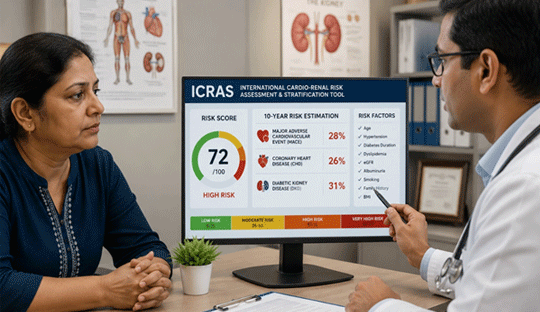
People with type 2 diabetes face a substantially higher risk of developing cardiovascular disease (CVD) and chronic kidney disease (CKD), yet these complications often remain undetected until advanced stages. Although several cardiovascular and renal risk calculators are available, most were developed using Western populations, assess only a single complication, and fail to account for India-specific clinical characteristics and risk patterns. Addressing this important gap, researchers have developed the International Cardio-Renal Risk Assessment and Stratification (ICRAS) Tool, a comprehensive, evidence-based risk assessment model designed to simultaneously estimate the risk of major adverse cardiovascular events (MACE), coronary heart disease (CHD), and diabetic kidney disease (DKD) in individuals with type 2 diabetes.
The ICRAS tool was developed through a systematic review, meta-regression analysis, weighted risk-score modelling, and validation using a large simulated cohort of over 100,000 individuals. It integrates multiple demographic, lifestyle, family history, clinical, and biochemical variables including age, blood pressure, glycaemic status, lipid profile, kidney function, smoking history, and other established risk factors into a simple 0–100 composite risk score. Based on the calculated score, patients are stratified into different risk categories, enabling clinicians to identify high-risk individuals earlier and tailor preventive interventions accordingly. By combining cardiovascular and renal risk assessment into a single platform, ICRAS represents a promising step toward personalized, preventive diabetes care, particularly for Indian and other South Asian populations where the burden of cardiometabolic disease continues to rise.
For enquiries info@jothydev.net.
Please visit: jothydev.net | research.jothydev.com | diabscreenkerala.net | jothydev.com/newsletter