
|

|

|
|

|
|



1. The Delta Disruption: How a Tiny Cell Could Be Hiding a Big Diabetes Risk
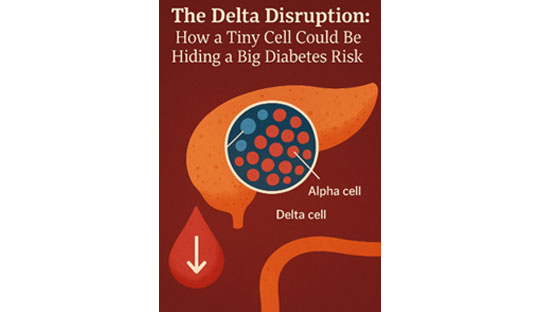
We all know that type 1 diabetes happens when the body attacks insulin-producing beta cells. But scientists just discovered that another lesser-known cell—the delta cell—is also changing its behavior in this condition. And it might be silently contributing to the risk of dangerous low blood sugar (hypoglycemia).
A new study from Scientific Reports (Nature group) reveals surprising changes in the pancreas architecture of people with type 1 diabetes.
Key Findings
-
Delta cells are on the move
In a healthy pancreas, delta cells (which produce a hormone called somatostatin) are spread evenly inside the islet. In type 1 diabetes, they move to the outer edge-changing the entire islet layout. -
Too close for comfort
Delta cells were found hugging alpha cells (which release glucagon, the hormone that raises blood sugar) twice as often in people with type 1 diabetes. This might block glucagon release-especially when it’s most needed, like during a sugar crash. -
Delta cells outside the neighborhood
Researchers found more delta cells scattered outside the islets, where they don’t usually live. Why they are there-and what they’re doing-is still a mystery.
Why Does It Matter?
-
Hypoglycemia Alert System May Be Broken
Glucagon is the emergency hormone that helps bring sugar levels back up when they fall too low. If delta cells are overactive or in the wrong place, they may “silence” alpha cells, preventing this life-saving backup. -
It’s Not Just About Insulin
Most diabetes treatments focus on insulin—but this study shows that other cells are part of the story too. Fixing delta cell behavior might be key to safer diabetes care.
What’s Next?
- Larger studies: Scientists now want to study more pancreatic samples to confirm these findings.
- Lab tests: They also plan to test whether blocking delta cell hormones could reboot the glucagon response.
- New drug ideas: If we can control delta cell behavior, it could lead to new treatments to reduce hypoglycemia risks.
In Simple Terms…
Imagine a neighborhood where one quiet resident (the delta cell) suddenly moves closer to a neighbor (the alpha cell) and keeps telling them to be quiet. That neighbor is the one who should raise an alarm during an emergency—but now, they’re being silenced. That’s what might be happening in the pancreas of someone with type 1 diabetes.
This discovery opens the door to rethinking diabetes treatment—not just replacing insulin, but helping the body react better when sugar levels drop too low.
GEMS Takeaway
“Delta cells may be the hidden players in type 1 diabetes. Understanding their role could help us prevent severe lows and build smarter, safer treatments.”
For enquiries info@jothydev.net.
Please visit: jothydev.net | research.jothydev.com | diabscreenkerala.net | jothydev.com/newsletter