|
|
|
|

|
|



4. Transforming Diabetes Management: The Role of isCGM and Telemedicine in Glycemic Control
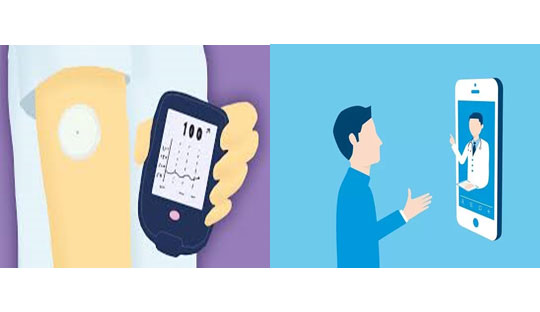
The integration of digital health technologies, particularly Continuous Glucose Monitoring (CGM), has significantly transformed diabetes management. While both real-time and intermittently scanned CGM (isCGM) have been widely used in type 1 diabetes (T1D), their role in type 2 diabetes (T2D) is also gaining attention, especially within a connected healthcare ecosystem. Traditional self-monitoring of blood glucose (SMBG) provides a point-in-time glucose value rather than a continuous trend over time, which limits the ability to detect trends and fluctuations. In contrast, CGM continuously tracks glucose levels, offering a comprehensive picture of glycemic control.
The study aimed to assess the proportion of participants with T1D (Type 1 Diabetes Mellitus) and T2D (Type 2 Diabetes Mellitus) using Intermittently Scanned Continuous Glucose Monitoring (isCGM) within a connected ecosystem, which provided 24/7 access to live conversations through a telemedicine system. This continuous support system, along with telemedicine access, facilitated real-time management and timely interventions. Glycemic targets, including Time in Range (TIR) and Time Below Range (TBR), were customized based on the presence or absence of comorbidities, following ATTD consensus and ADA guidelines.
Study included 14-day isCGM data for 418 participants (average age 54.4years, BMI 25.8 kg/m²) from HCP data-view site of connected system. A comparative analysis of glycemic variability, coefficient of variation (CV), and other parameters was conducted.
The results demonstrate that 78% of participants with comorbidities and 59% without comorbidities met their target TIR and TBR levels. Notably, 93.8% of T2D participants maintained a coefficient of variation (CV) below 36%, compared to only 27.8% of T1D patients, indicating greater glucose stability in T2D. A strong negative correlation (r = -0.522, p < 0.001) was found between HbA1c and TIR, with a 1% increase in TIR corresponding to a 0.053% decrease in HbA1c. Additionally, the highest TIR was observed in T2D patients on oral hypoglycemic agents (OHA) + GLP-1 receptor agonists (TIR: 86.4%, TBR: 0.5%), followed by those on OHA only (TIR: 84.7%, TBR: 1.8%), and the OHA + Basal-Bolus therapy group (TIR: 72%, TBR: 1.4%).isCGM with a connected care system along with 24/7 live telemedicine support is highly effective in achieving glycemic targets, regardless of the treatment regimen, including the OHA-only regimen in T2D.
For enquiries info@jothydev.net.
Please visit: jothydev.net | research.jothydev.com | diabscreenkerala.net | jothydev.com/newsletter