
|

|

|
|

|
|



4. Pancreas Under Attack: How a Protein Helps Viruses Drive Type 1 Diabetes
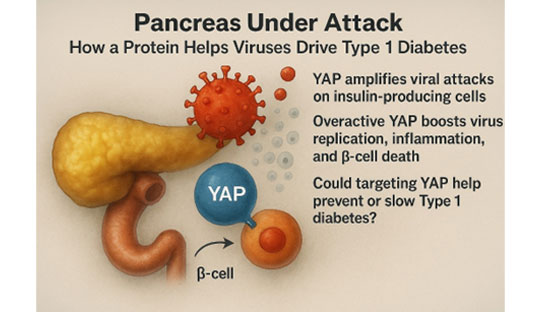
A new study in Nature Communications uncovers a surprising villain in type 1 diabetes (T1D): a protein called YAP (Yes-associated protein). Normally a helper in tissue repair, YAP may amplify viral attacks on insulin-producing cells, giving viruses a dangerous boost.
Study Snapshot
- People with T1D
- Individuals with autoantibodies (AAb⁺), early signs of autoimmune activity
They combined tissue analysis, human cell experiments, and mouse models to track how YAP influences viral infections in the pancreas.
Key Findings:
- YAP levels were high where viral RNA was detected.
- Overactive YAP increased virus replication, inflammation, and beta-cell death.
-
Mice with YAP overexpression in beta cells showed:
- Poor glucose tolerance
- Reduced insulin secretion
- Signs of beta-cell “downgrading” (dedifferentiation)
- Blocking YAP protected cells resulted in slower virus replication and improved pancreatic function.
How Viruses May Trigger Type 1 Diabetes?
Pancreatic enterovirus infection may contribute to T1D through multiple pathways:
- Direct β-cell damage: Viruses infect and destroy insulin-producing β-cells.
- Viral persistence: Chronic infection activates the immune system, attracting immune cells to the islets, causing inflammation, β-cell injury, and release of autoantigens, which trigger autoreactive T-cell responses,leading to further β-cell destruction (“bystander damage”).
- Molecular mimicry: Some viral proteins resemble β-cell proteins, causing the immune system to mistakenly attack β-cells.
These mechanisms are seen in other autoimmune diseases as well. However, it is still unclear whether viruses directly initiate autoimmunity or mainly accelerate an ongoing autoimmune process.
Why This Matters for Diabetes?
- Viruses like Coxsackievirus B can trigger T1D, but YAP seems to drive the damage further, creating a vicious cycle:
- Virus infects β-cells →
- Activates YAP →
- Virus replicates faster →
- More β-cell stress →
- Accelerated disease progression
- Targeting YAP could be a new way to prevent or slow early T1D, especially in children and young adults at risk.
Public Health Implication
- T1D may no longer just be “genetic + environment”, viral infections combined with overactive YAP can actively push the pancreas toward diabetes.
- Early interventions (YAP inhibitors, antivirals, vaccines) could protect at-risk individuals.
- Screening for YAP activity or viral markers might help identify high-risk children before disease onset.
GEMS Takeaway
- YAP, normally a repair protein, helps viruses multiply in the pancreas, speeding up β-cell loss.
- Medicines that block YAP or reduce viral load could prevent diabetes in high-risk kids.
- Viral infection mechanisms such as bystander damage and molecular mimicry explain how viruses may initiate or accelerate autoimmune β-cell destruction.
- This study reinforces that preventing early viral damage is key to stopping type 1 diabetes in its tracks.
For enquiries info@jothydev.net.
Please visit: jothydev.net | research.jothydev.com | diabscreenkerala.net | jothydev.com/newsletter