
|

|

|
|

|
|



7. Drug Updates
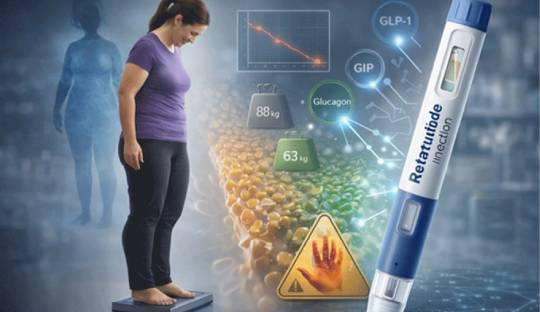
Retatrutide Delivers Unprecedented Weight Loss, with a New Sensory Effect to Watch
What’s New:
The management of obesity may be on the cusp of another major shift. Data from the TRIUMPH-4 trial show that retatrutide, a first-in-class triple incretin receptor agonist, achieved an average 28–29% reduction in body weight over 68 weeks in individuals with obesity and knee osteoarthritis. This magnitude of weight loss exceeds that reported with currently available dual incretin therapies and approaches outcomes traditionally associated with bariatric surgery, highlighting the transformative potential of this agent.
Clinical update:
Retatrutide’s exceptional efficacy is driven by its unique ability to activate three key metabolic receptors simultaneously GLP-1, GIP and glucagon. GLP-1 receptor stimulation suppresses appetite and reduces caloric intake, GIP enhances insulin sensitivity and metabolic efficiency, while glucagon receptor activation promotes energy expenditure and fat oxidation. Acting together, these pathways appear to produce additive and synergistic effects, resulting in deeper and more sustained weight loss than has been achievable with single- or dual-agonist therapies.
Safety note:
Beyond the expected gastrointestinal adverse effects commonly associated with incretin-based therapies, TRIUMPH-4 identified a novel dose-dependent sensory signal. Dysesthesia, described as altered or abnormal skin sensations without visible rash or tissue injury, was reported in 20.9% of participants receiving the 12 mg dose, 8.8% at 9 mg, and 0.7% in the placebo group. Importantly, these events were predominantly mild, rarely necessitated treatment discontinuation, and did not increase overall dropout rates compared with placebo.
Clinical interpretation:
Although the mechanism underlying dysesthesia remains unclear, its recognition is clinically relevant, as similar sensory symptoms have been infrequently reported with other incretin therapies. Current evidence suggests that this effect is more of a tolerability issue than a safety-limiting concern. Nevertheless, questions remain regarding long-term persistence, the impact of slower dose escalation, and whether the symptom correlates with treatment efficacy or exposure.
Clinical implication:
From a practical standpoint, retatrutide appears to offer a favourable benefit risk profile, particularly for patients requiring substantial and durable weight reduction. As with any high-impact therapy, careful patient selection, clear counselling about potential adverse effects, and close follow-up will be essential. Transparency regarding both the remarkable efficacy and the emerging sensory signal will help set realistic expectations and support shared decision-making.
GEMS Takeaway:
Retatrutide represents a significant advance in obesity pharmacotherapy, delivering near surgical levels of weight loss through triple-receptor agonism. While a novel sensory adverse-event signal has emerged, current data suggest it is generally mild and manageable. With informed use and continued surveillance, retatrutide has the potential to reshape long-term obesity management.
For enquiries info@jothydev.net.
Please visit: jothydev.net | research.jothydev.com | diabscreenkerala.net | jothydev.com/newsletter