
|

|

|
|

|
|



8. Somogyi Effect
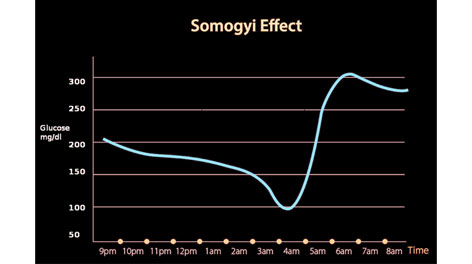
The term Somogyi is named after Dr. Michael Somogyi, a Hungarian-American biochemist who first described this phenomenon. The Somogyi effect refers to a pattern of rebound hyperglycemia following an episode of unrecognized nocturnal hypoglycemia. It typically occurs when excessive evening or bedtime insulin doses cause blood glucose to fall too low during the night. In response, the body releases counter-regulatory hormones such as glucagon, cortisol, and epinephrine, which stimulate glucose production by the liver—resulting in high fasting blood glucose levels by morning. Differentiating the Somogyi effect from the dawn phenomenon (which is due to natural hormonal surges without prior hypoglycemia) is essential for appropriate insulin dose adjustments. Continuous glucose monitoring (CGM) or early morning glucose checks (around 2–3 AM) can help detect this pattern.
For enquiries info@jothydev.net.
Please visit: jothydev.net | research.jothydev.com | diabscreenkerala.net | jothydev.com/newsletter