
|

|

|
|

|
|



2. Why “Cutting Down” on Smoking Isn’t Enough: The Real Risk of Even Light Smoking
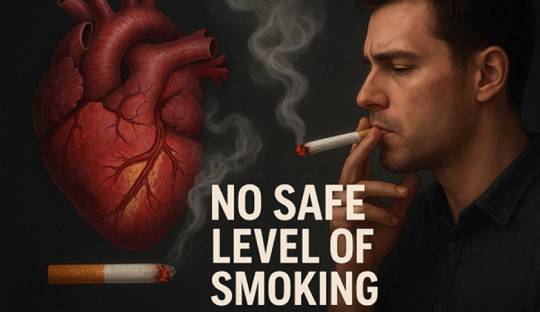
Smoking has long been known as a major threat to heart and vascular health. But many people hoping to moderate harm adopts the idea: “If I smoke less, I’ll be safer.” A major new study challenges that notion head-on: smoking fewer cigarettes does not eliminate cardiovascular disease risk. Even light, low-intensity smoking remains dangerous and the only real way to protect your heart is to quit entirely.
The study carried out by researchers at Johns Hopkins Medicine and funded by the National Heart, Lung, and Blood Institute (NHLBI) drew on a large, robust dataset combining 22 long term cohort studies (the Cross-Cohort Collaboration (CCC)). Altogether, data from 323,826 adults, tracked for up to nearly 20 years, were analyzed for smoking history, intensity, and cessation duration and their relationship with cardiovascular events and mortality.
What the Study Found: Light Smoking Is Still Risky? Smoking has long been known as a major threat to heart and vascular health. But many people hoping to moderate harm
- The study reinforced that even very low levels of smoking, a few cigarettes a day, carry substantial cardiovascular risks.
- For example, prior research showed that smoking just 2–5 cigarettes a day was associated with about a 50% increased risk of heart failure, and a 60% higher risk of death from any cause, compared with people who never smoked.
- The same pattern held across a range of cardiovascular outcomes, not just heart failure. Reduction in cigarette count per day did not eliminate the elevated risk: the cardiovascular risk remained significantly higher compared with never-smokers even at low smoking levels.
In simpler terms: there is no safe level of smoking when it comes to the heart and vascular system.
Why Cutting Back Isn’t Enough, What Happens in the Body?
Health experts explain that smoking harms the cardiovascular system through multiple overlapping mechanisms, many of which are triggered even with small amounts of exposure:
- Endothelial dysfunction & inflammation: Cigarette smoke damages the inner lining of blood vessels, promoting inflammation and impairing the ability of vessels to dilate properly. This contributes to atherosclerosis, the buildup of plaques in arteries.
- Oxidative stress & pro-atherogenic lipid oxidation: Smoke accelerates harmful changes in blood lipids and stimulates oxidative stress, which further damages blood vessels and increases clotting tendency.
- Rapidly triggered damage at low doses: It appears the body’s protective mechanisms can be overwhelmed even by low-dose exposure. That means the jump from “zero cigarettes” to “just one or two a day” may already trigger serious cardiovascular harm. Even very low levels of cigarette smoke trigger the same biological pathways that lead to harm .1 cigarette and 10 cigarettes a day do not carry the same risk, but the curve rises very sharply at the low end.”
So, while heavier smoking obviously increases risk further, the initial “few-a-day” level already carries a significant burden, enough to substantially elevate the chance of heart disease, heart failure, stroke, and early death.
What Quitting Does and When It Matters Most?
The research underscores a key, hopeful message: quitting smoking entirely, especially early in life, offers
the greatest protection for cardiovascular health.
Specific insights:
- The longer the duration since quitting, the greater the reduction in cardiovascular risk. Time since cessation was one of the strongest predictors of how much risk decreased.
- However, even former smokers may need years, sometimes decades, before their risk approaches that of lifelong non-smokers.
- This means the earlier someone quits, the better and quitting completely is far more effective than merely cutting back on cigarette use.
Why This Matters for Individuals and Public Health? This new evidence comes at a crucial moment. While global awareness about the dangers of heavy smoking is widespread, many public health and personal messaging campaigns (implicitly) suggest that “light smoking” may be “less harmful” or “manageable.” This study dismantles that misconception.
- For individuals who smoke occasionally or “socially,” this serves as a wake-up call: even a small habit carries real danger.
- For public health systems and policymakers, the findings strengthen the urgency to promote complete smoking cessation, rather than harm-reduction strategies based simply on “smoke less.”
- For clinicians and heart-health advocates, there's a clear message: it’s never “safe enough” screening, counseling, and cessation support must target all smokers, including light and intermittent users.
GEMS Take Away
Cutting down may feel like progress. But when it comes to the heart, only quitting counts. No matter how
light, smoking remains a serious cardiovascular threat. The sooner you quit the sooner your blood vessels
start healing; the sooner you reclaim the level of heart and vascular health you’d have had otherwise.
For those still smoking, this evidence is a compelling argument: drop the idea of “just a few a day” and go
for complete freedom from tobacco.
For enquiries info@jothydev.net.
Please visit: jothydev.net | research.jothydev.com | diabscreenkerala.net | jothydev.com/newsletter