
|

|
|
|

|
|



2. Smoking: A Hidden Driver of All Subtypes of Type 2 Diabetes
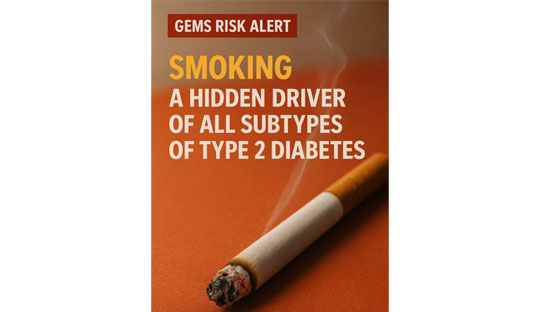
We’ve long known that smoking raises the risk of heart disease and cancer, but did you know it can also directly contribute to every major form of type 2 diabetes?
A powerful new study from Scandinavia is now shining light on the dangerous link between smoking and all four subtypes of type 2 diabetes (T2D) and the findings are a wake-up call for both individuals and public health systems.
What Did the Study Find?
Researchers studied over 3,300 individuals with type 2 diabetes and nearly 3,900 controls across Sweden, Norway, and Finland. They classified diabetes into four key subtypes:
- SIRD – Severe Insulin-Resistant Diabetes
- SIDD – Severe Insulin-Deficient Diabetes
- MOD – Mild Obesity-Related Diabetes
- MARD – Mild Age-Related Diabetes
Here’s what they discovered:
- Ever-smokers (current or past) had a significantly increased risk for all four subtypes.
- The highest increase was seen in SIRD, with a 2.15× higher risk compared to never-smokers.
- Heavy smokers (15+ pack-years) had even higher risks, 2.35× for SIRD, and 45–57% higher risk for the other subtypes.
- Use of smokeless tobacco (like Swedish snus) was also associated with elevated risk, especially for SIRD and SIDD.
- Smokers with genetic risk factors, especially related to insulin secretion, faced up to 3.5× higher risk of developing SIRD, when compared to those without risk factors.
Using a diabetic mouse model, researchers found that:
Why This Matters
This study is one of the first to show that smoking doesn’t just increase your general risk for diabetes, it increases your risk across every subtype. Particularly concerning is the link to SIRD, which is associated with higher complication rates and insulin resistance.
When combined with genetic susceptibility, the impact of smoking becomes even more dangerous. This highlights the urgent need for personalized prevention strategies, especially in populations with rising rates of early-onset T2D.
What Should You Do Now?
- Quit smoking—even reducing exposure can lower your risk.
- Avoid smokeless tobacco—it’s not a safe alternative
- Know your family history—and be more proactive if T2D runs in your genes.
- Check for insulin resistance markers—especially if you have other risk factors like obesity or sedentary lifestyle.
GEMS Takeaway
This landmark study reinforces a clear and critical message: smoking is a serious risk factor for all forms of type 2 diabetes, not just cardiovascular or cancer-related illness.
Whether you’re a clinician, policymaker, or individual living at risk, these findings add urgency to smoking cessation efforts, especially when insulin resistance or genetic predisposition are already in play.
Preventing diabetes begins not just with sugar control, but with smoke control. For those at risk, every cigarette counts.
Let this be your signal to breathe easier, live healthier, and protect your metabolic future, one smoke-free day at a time.
For enquiries info@jothydev.net.
Please visit: jothydev.net | research.jothydev.com | diabscreenkerala.net | jothydev.com/newsletter